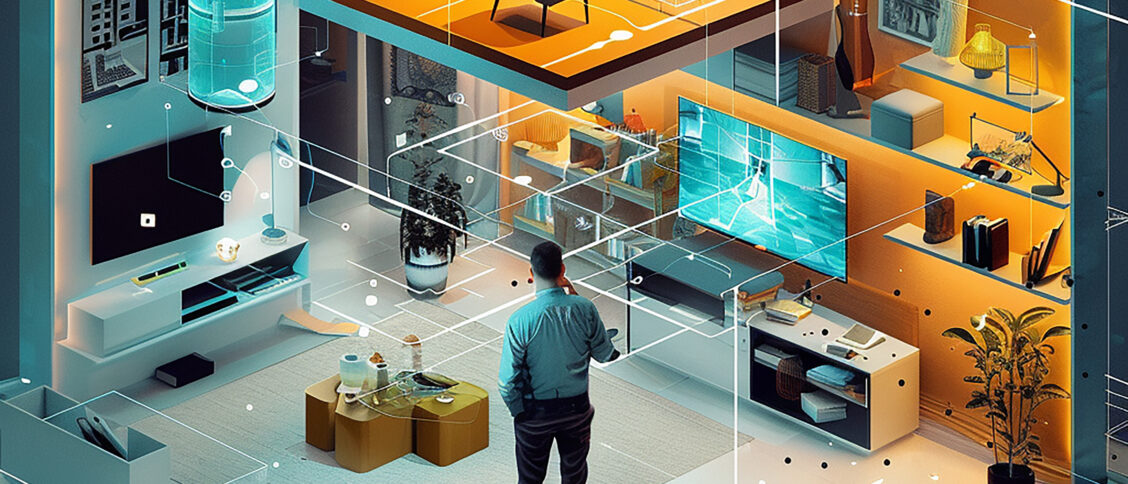

Imagine: An architect sits with a couple who are thinking of a future home. Technical drawings could explain dimensions and structure, but they rarely communicate feeling. A 3D visualisation does. A sunlit kitchen, soft shadows and spatial flow appear instantly on screen. The clients understand not just the layout, but how life might feel within it.
This is how 3D visualisation has quietly reshaped how ideas are shared. It turns abstract concepts into experiences that can be seen, explored and understood by anyone.
What Exactly is 3D Visualisation?
At its heart, 3D visualisation is the art and science of creating digital representations of objects and spaces that look three dimensional. Unlike traditional drawings or photographs, these digital models can be rotated, walked through, and viewed from any angle. They exist in virtual space with height, width, and depth, mimicking how we experience the real world. Think of it as building something twice: first in the computer, then in reality. Except the digital version lets you make mistakes, explore alternatives, and perfect every detail before a single nail is hammered or weld is made.

Architecture and Informed Decision Making
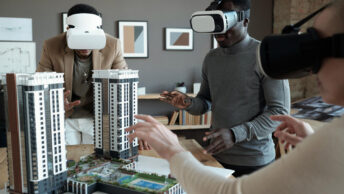
In architecture, 3D visualisation bridges the gap between design intent and practical execution. Complex forms and spatial relationships that are difficult to interpret on paper become clear when viewed in three dimensions. When Zaha Hadid’s firm designed the flowing, organic shapes of the Heydar Aliyev Centre in Azerbaijan, traditional drawings simply couldn’t capture the building’s complex curves and spatial relationships. 3D models allowed engineers and builders to understand exactly how each piece would fit together. More importantly, it invites clients into the process. They can walk through spaces, understand scale, observe natural light and question layout choices before construction begins. Decisions become collaborative rather than technical, saving time, money and uncertainty.
Interior Spaces and Emotional Accuracy
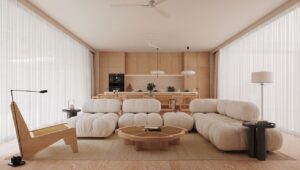
Interior design relies heavily on trust. Clients are often asked to commit to colours, textures and layouts based on samples and imagination. 3D visualisation removes much of that guesswork. Designers can present spaces exactly as they would appear, using realistic lighting and perspective. Clients see how a bold colour behaves in daylight, how furniture fits within a room and how the overall atmosphere feels. This clarity is especially valuable in commercial interiors where experience directly affects performance.
Automotive Design and Accelerated Development
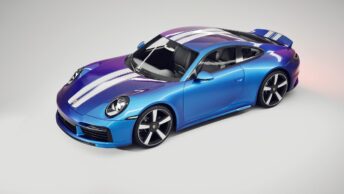
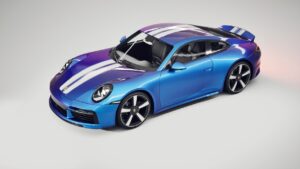
The automotive industry has undergone a major shift through 3D visualisation. What once required physical clay models and long production cycles is now explored digitally with speed and precision. Designers and engineers test form, function and safety within the same environment. Visualisation ensures components fit together efficiently and allows marketing teams to present vehicles long before physical models exist. In many cases, what appears in advertising is a digital 3D Render rather than a photograph.
A Shared Visual Language
The true power of 3D visualisation lies in communication. It gives experts and non-experts a common language. Clients no longer need to interpret technical drawings or rely on trust alone. They can see, question and contribute meaningfully. It also supports smarter design choices. Designers focus effort where it matters visually and functionally, while simplifying elements that do not affect experience or performance.
Looking Ahead
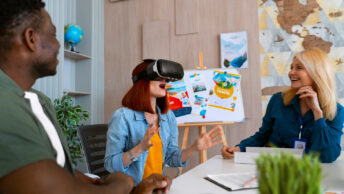
Technologies such as Virtual Reality, Augmented Reality and AI driven design tools are extending what visualisation can do. But the fundamental human truth remains unchanged: people understand what they can see. 3D visualisation doesn’t replace creativity, skill, or expertise. It amplifies them. It lets the architect’s vision live in the client’s mind. It helps the designer’s carefully considered choices feel obvious rather than risky. It allows automotive engineers to push boundaries while ensuring safety and manufacturability. In the end, 3D visualisation is about reducing the gap between idea and reality.
At Alviz Studios, this belief drives every project. Beyond producing refined visual work, the focus is on exploring what becomes possible when imagination and innovation meet. The journey continues, and you are invited to be part of it!